When humans were created — whether through natural or evolutionary processes — the first gift they were blessed with was language. Language emerged not merely as a means of communication but as a powerful tool of representation, a vital agency for transferring knowledge. Through it, humans created concepts, built narratives or counter-narratives, and shaped their understanding of the world. The invention of language — evolving from natural signs to non-verbal gestures, and eventually to codified words with grammar, diction, syntax, and morphology — was neither innocent nor simple. It was a profound act that defined the human journey. As Jean-Jacques Rousseau argued, it was this language that transformed the “noble savage” into a civilized being.
Not long ago, I had an eye-opening phone conversation with Mr. Yaseen Kichloo, IPS. The call lasted for about half an hour. He explained quantum theory in a very scientific and clear way, focusing on how it works. But his explanation made me think deeper — about how such ideas, like programmed language, quantum particles, or paradigms referred to as “entanglement” by Mr. Yaseen Kichloo, are connected to communication. I began to see how messages are sent in unusual ways, just like how intelligence agencies such as the CIA, KGB, and MOSSAD etc. share secret information. These signals can be hidden in shoelaces, toys, coded texts, or encrypted words. This method of communication reminded me of thinkers like M. Facult, who studied how knowledge is built through language and called it knowledge–power–truth relationship. Derrida, who said that meaning is never fixed and always changing. He gave a call for the deconstruction of all artifacts. Similarly, François Lyotard spoke about rejecting grand meta-narratives — the big stories that try to explain everything. Emmanuel Levinas also called such stories totalising systems of thought. These ideas made me realize that knowledge, communication, and truth are always changing and evolving.
Dialectics: Learning Through Opposing Ideas
Our journey begins with dialectics — a way of learning by exploring opposite ideas. Ancient thinkers like Socrates and Heraclitus, and later philosophers like Hegel and Marx, taught us that asking questions, challenging old beliefs, and accepting contradictions are essential to understanding life.
According to Hegel, history moves through a process of thesis, anti-thesis, and synthesis. Every idea or condition (thesis) creates its opposite (anti-thesis), and the interaction between the two forms a new idea or solution (synthesis). Going forward, every synthesis becomes a new thesis, and the cycle continues.
For Marx, this process was rooted in material reality. Through dialectical materialism, he framed history as a series of class struggles where progress emerges through the negation of the negation — contradictions in society, economy, and production giving rise to new social forms and relations.
Relativity: Seeing Time, Space, and Truth Differently
Einstein’s theory of relativity changed how we view time and space. He showed that they are not fixed for everyone but depend on where you are and how you are moving. This idea taught us that truth is not always simple or the same for everyone. It is contextual above time and space. It made us more open to different perspectives.
For example, Greenwich Mean Time (GMT) is often thought of as a universal standard. But it’s not purely scientific or geographical — it’s shaped by history and politics. It reflects the colonial hegemony of the British Empire-The Pax Brittanica, whose sun was said never to set. (Since Greenwich is a place in Britain, it became a symbol for the world’s time zone.) This GMT was not alone in claiming world recognition rather there were multiple others too in line- but Almighty GMT was accepted as basis for global time zone only in 1884 at international Maridian Conference, shows nothing but the then unrivaled power of Great Britan. I sometimes say that if another civilization, like the Malipeth, had colonized the world instead of Britain, it would be called MMT — Malipeth Mean Time. Even Almighty GMT has been replaced by new avatar named Coordinated Universal Time (UTC) which is more USA ( Pax Americana) centric – with effect from 1ist of January 1972 A.D.by This shows how even time is influenced by power and control.
Similarly, lines like latitude, longitude, or the equator are not “real” lines but imaginary ones. Every map clearly says they are created for reference. This shows that our understanding of the world depends on how we choose to define it.
Quantum Physics: Accepting Uncertainty and Reality’s Context
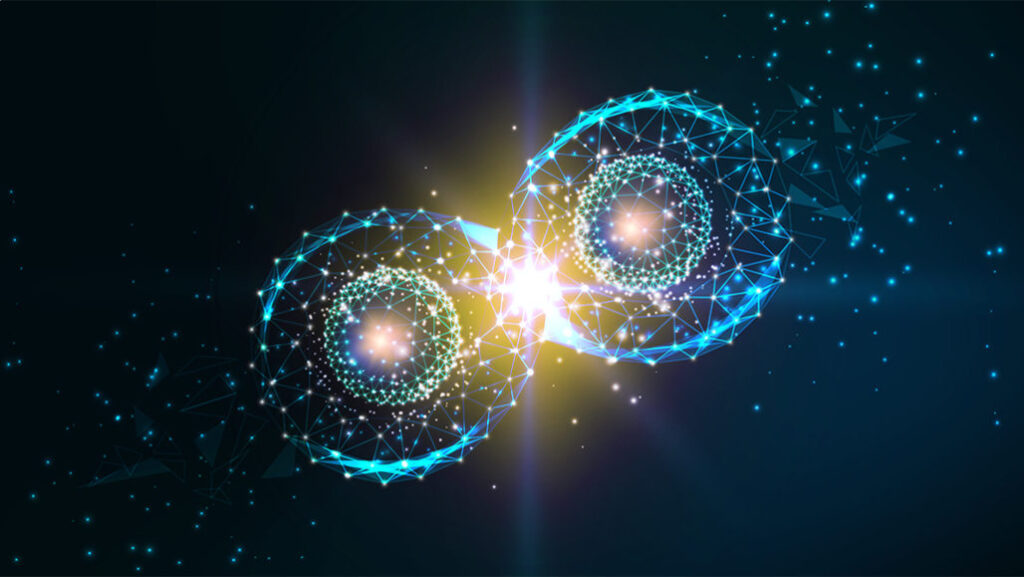
Quantum physics takes this idea further. At the smallest level, matter behaves in surprising ways. Particles don’t always follow clear rules, and observing them can even change how they behave. This teaches us that uncertainty is a natural part of life, and reality is much more mysterious than it seems.
A thought that deeply affected me comes from a Hollywood-based science fiction movie, namely Lucy. It suggests that when the human brain’s full capacity is used, reality itself loses its meaning. What is left is a vacuum where existence seeks justifications, shaped by the situations we are in. The actress gives an example of a moving car reaching its highest speed to the point that it becomes invisible. She also jumps from the Stone Age to the electronic age in a fraction of microseconds, with all historical eras, continents, movements, or revolutions at her service. In simple words, what is right or wrong, true or false depends on where, when, and how we experience it.
The final message we get from it is simple yet very lucid. In such a world, when humans are faced with choices — such as immortality or reproduction — they often choose the easiest way to ensure continuity. Passing knowledge, skills, and experiences to the next generation through reproduction becomes the simplest method to sustain life, irrespective of what has been learned or gathered so far.
From Language of Power/Intellect to Language of Feelings, Understanding, and Inclusivity
Language is at the heart of this journey. It helps us share knowledge, ask questions, and create new ideas together. Whether in formulas or secret codes, communication shapes how we understand the world. Today’s technology makes it easier to connect across countries, but it also asks us to be careful, kind, and open to different opinions.
The most important change in this journey is how we use language. Instead of using it only as a tool of power or intelligence, we should use it to express feelings, build understanding, and bring people together. We should learn more but speak less. We should feel more but overthink less. We should not be controlled by any text or story that tries to colonize our minds or dominate our spirits.
This journey through ideas, science, and communication teaches us that knowledge is not a weapon — it is shared light. By accepting uncertainty and practicing compassion, every unheard voice matters, every quiet feeling finds strength, and every silenced mind finds its voice. In this way, we may approach an answer to the question posed by Gayatri Spivak: “Can the Subaltern Speak?”
Disclaimer: The views expressed here are personal and do not reflect my official position. They are shared as part of my rights under Article 19(1) and my duties under Article 51(a) of the Constitution of India.
Leave a Reply